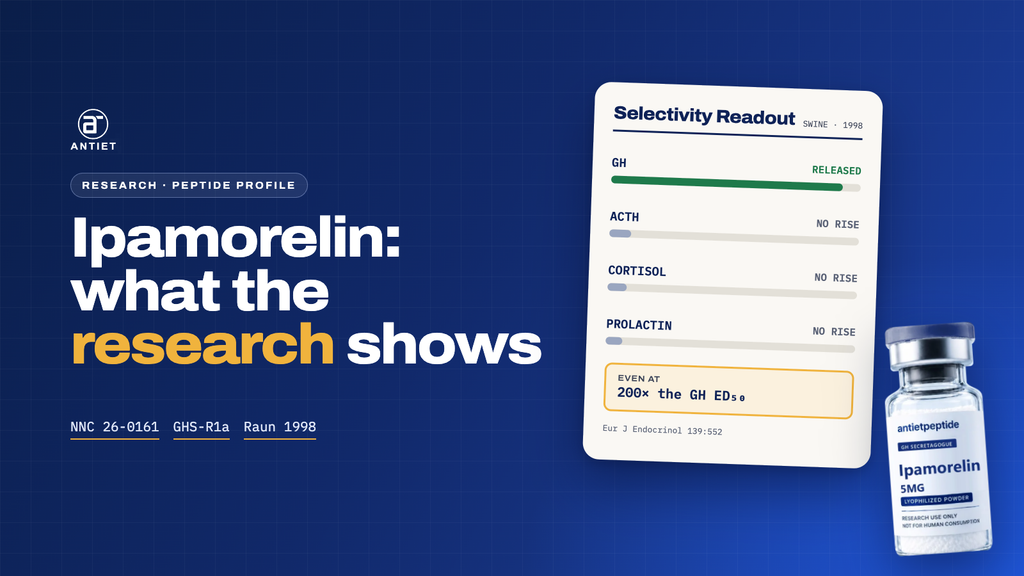
Ipamorelin: What the Research Shows
Ipamorelin is a small synthetic peptide that prompts the pituitary gland to release growth hormone, and it carries one of the strangest backstories in peptide research. A major pharmaceutical company built it, a 1998 paper called it the first of its kind, it reached human trials for a gut-recovery condition, and then development stopped. Most […]
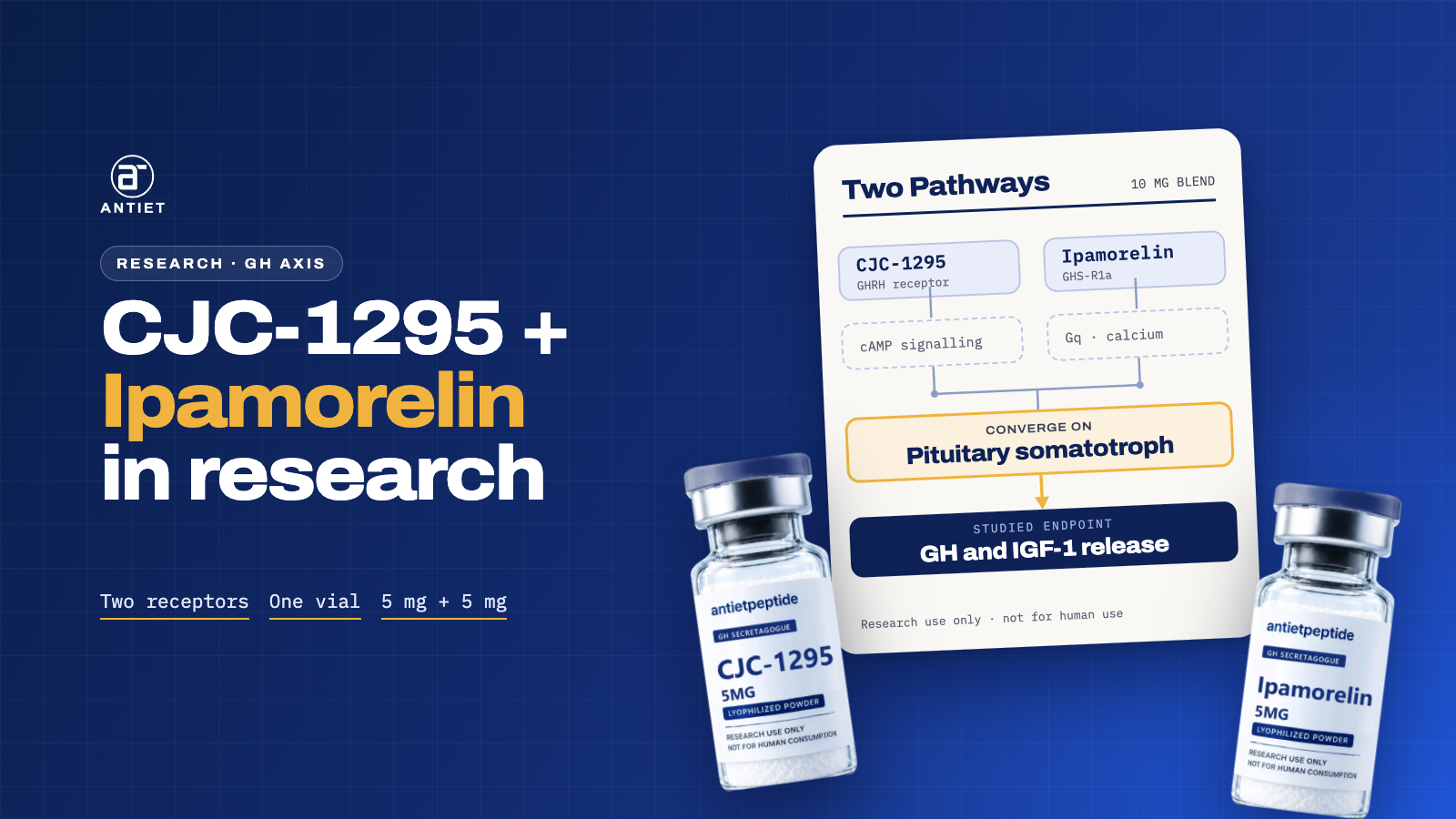
CJC-1295 + Ipamorelin: Why They’re Combined in Research
Two peptides, one vial, and a label that tells you almost nothing about why they’re in there together. A CJC-1295 ipamorelin blend pairs two compounds that hit two separate receptors on the same pituitary cell, which is the whole reason anyone puts them in one vial. Quick answer: CJC-1295 is a GHRH analog that signals […]
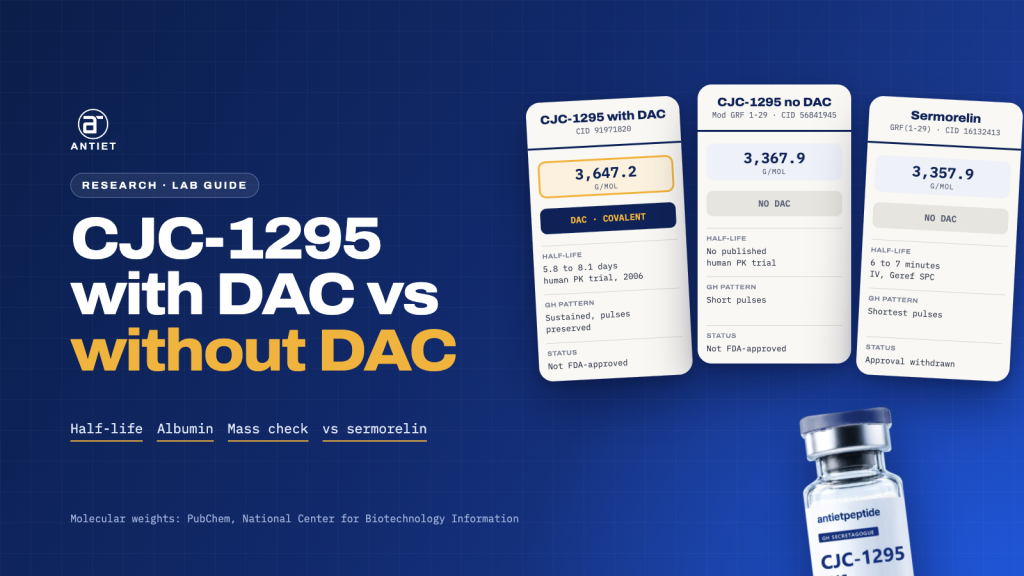
CJC-1295 With DAC vs Without DAC (vs Sermorelin): A Research Comparison
Two vials can carry the same name on the label and behave nothing alike in a study model. CJC-1295 is a synthetic copy of the first 29 amino acids of growth hormone-releasing hormone, and it exists in two versions. The difference between them is one small chemical attachment called DAC, which pins the peptide to […]
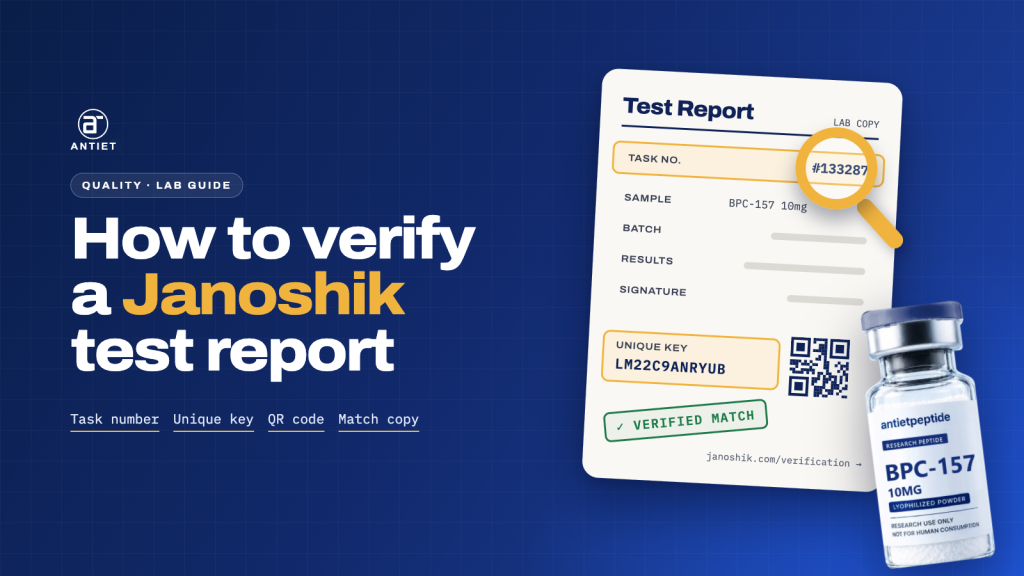
How to Verify a Janoshik Test Report
A Janoshik report only counts once you have checked it against the laboratory’s own copy, and that takes about a minute. Until then, it is a PDF someone sent you, and a PDF can be edited by anyone with the right software. That is the whole reason researchers should know how to verify a Janoshik […]
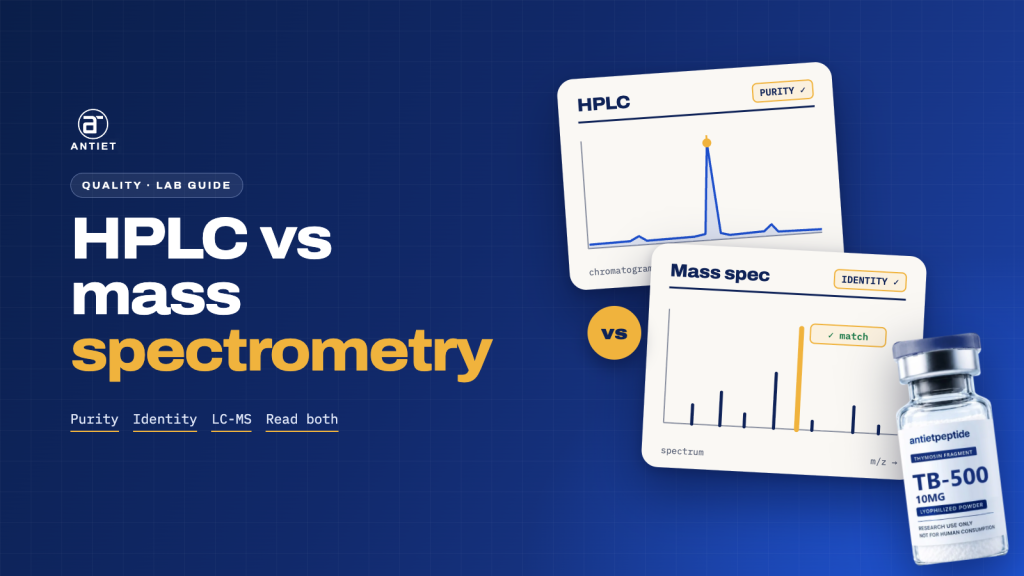
HPLC vs Mass Spectrometry: What Each Test Confirms
Open any peptide certificate of analysis, and you will usually find two results printed side by side: an HPLC purity figure and, sometimes, a mass spectrometry result. They look like two versions of the same check, but they answer different questions. One asks how much of the vial is the target peptide, the other asks […]
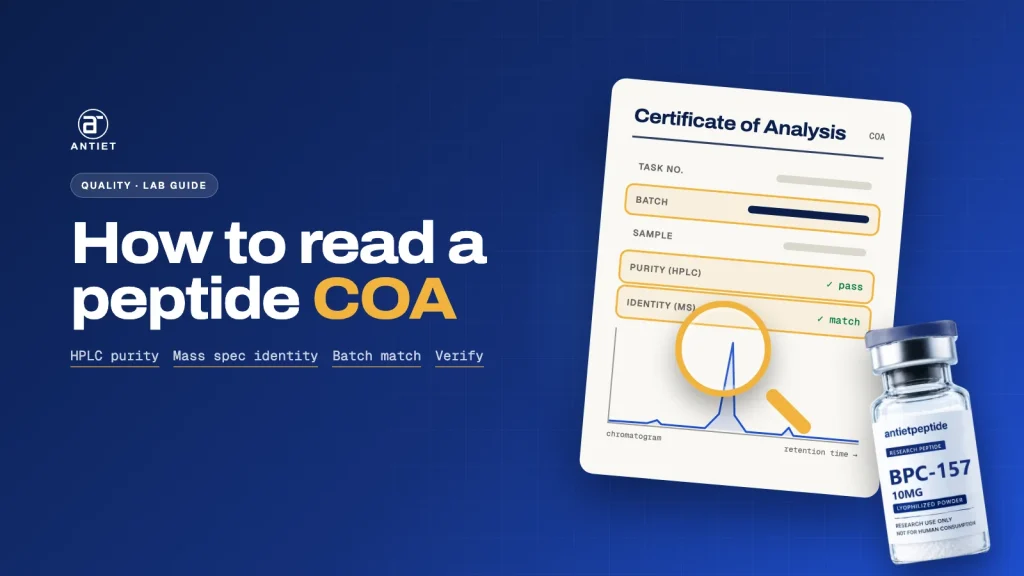
How to Read a Peptide COA (Certificate of Analysis)
Learn how to read a peptide certificate of analysis: HPLC purity, mass spec identity, net peptide content, lot numbers, lab verification, and signs of a fake COA.